Medieval Knight Myth

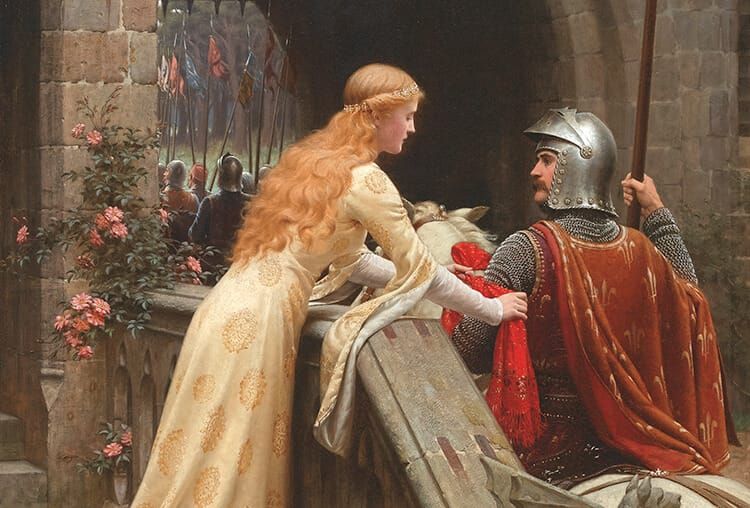
Medieval knights were not honourable, noble, or pious. That figure NEVER EXISTED!
The "white knight" of fairy tales never existed. That romanticized version was created centuries after knights became irrelevant — because people wanted a hero, not a thug.
The myth began as romance novels for bored noblewomen. French poets wrote erotic stories about knights and adultery, and these stories became popular. That's how "chivalry" began. Smut involving noble ladies and armoured warriors.
Medieval knights loved this image. They could point to the novels and claim: "we live to serve!", while bullying Europe and its people.
But really, medieval knights were just armoured thugs and enforcers of their liege. They were not the romanticized protectors of the weak — they were the ones people needed defence from.
The Institution of Knights (~800 - 1500CE): Overview
The Church saw knights as a menace to social order as soon as the first knights mounted their horses and plunged into battle.
To address that problem, the Church proclaimed the Peace of God and the Truce of God (~1000CE) specifically to forbid knights from killing clerics, peasants, women, and children. Knights were further forbidden from burning crops, destroying property, slaying livestock, and raping nuns. Furthermore, any knight who was caught fighting on Sundays would be punished by excommunication.
Because you see, if medieval knights had actually been honourable and moral, they wouldn't have to be told to behave themselves.
The Church was prohibiting knights from what they were ACTUALLY doing.
If knights didn't rob churches, the Church wouldn't forbid knights to rob churches.
Medieval knights were not honourable, virtuous, or morally superior. They were vicious, rogue, and out of control. They had to be domesticated.
The Church spent 500 years trying to bring knights under control. They failed. Even Popes couldn't control them. Knights were eventually "defeated", but only when technology made them obsolete. Until then? They did whatever they wanted.
The Mythic Knight: Chivalrous, Heroic, Pure
Early Knights (pre 1000CE)
Knightly myths are probably as old as the institution itself (~800AD). Just like their later counterparts, early knights were motivated primarily by self-interest. To ensure they didn't die, knights came up with "agreements" to survive better.
Knights usually didn't kill each other. They took prisoners instead. Selling a knight was more profitable than killing him. The idea was: "Agree not to kill me, and I'll agree not to kill you. The loser pays the winner. Nobody dies, everyone happy."
One rich knight could buy you an entire estate if you defeated him. Even poor knights could fetch at least a decent horse. War as business. Killing knights ≠ Unprofitable.
At the same time, knights were brutal to peasants. So the small print included: "Peasants, common soldiers, and women are fair game. Kill and rape as many as you want. Just don't kill other knights."
And where did the knights come from? Most likely: barbarians.
After the fall of the Roman Empire (476AD), barbarian warlords around Europe became the new "kings" and lords. Over time, they could afford better weapons, armour, and refined cavalry tactics. By ~800AD, they would dominate Europe as heavy cavalry.
This is not an exaggeration. They were practically invincible. On horseback, they could destroy anyone they wanted — except other knights.
So the process was:
Early European Warlords -> Early Medieval Knights.
Genesis (1000-1200)
Knights themselves did not invent chivalry. That much is certain.
French troubadours and poets (1100+) invented that idea. They were commissioned (or at least encouraged) to write erotic/romantic stories involving knights and noblewomen describing their affairs. So the myth begins with romance literature, not real events.
The single most important figure in creating the myth appears to be Chrétien de Troyes. He invented tales of:
- Knights going on quests (not just warfare)
- Courtly love (knights serving a lady, adulterous)
- Knights fighting for honour, not profit
- Individual adventure narratives
- King Arthur's court as ideal (if he existed, historical Arthur was a post-Roman warlord. Chrétien made him medieval king)
The key to understanding these stories is this:
Chrétien wrote for court audiences. He wrote these romances especially for aristocratic women to reflect their fantasies, not military reality. His audience (female aristocrats) wanted smut about handsome warriors devoted to them, and Chrétien delivered.
It was always fiction, created for entertainment.
Chrétien credits Marie de Champagne (1145-1198) with the idea. She was a known patroness of literature, and made her court a literary salon. She would invite poets to debate love, with noblewomen as judges in these "courts of love". It was entertaining, but also influential. The fantasy spread from her court and evolved across Europe.
Knights loved this fiction because it was useful to justify power structures. It elevated violent aristocrats to bold, courtly, dragon-slaying, maiden-protecting saints. They adopted the outward symbols (especially in tournaments) and viewed themselves as moral guardians while behaving like warlords.
Medieval Times (1200-1400)
Romance literature spread across Europe. Aristocrats, knights, and even commoners enjoyed hearing these stories, so poets and troubadours continued working on the myth. The Arthurian legend was expanded, the Lancelot-Guinevere affair was fully developed, and "The Grail" was added.
The latter was very important: knights were no longer maiden-saving, honourable warriors fighting for their king. They became "holy warriors" fighting in the name of God.
The quest became spiritual, not just martial, and only the pure could achieve it.
Galahad is the "perfect knight". He succeeds because he is pure, religious, and a virgin. Lancelot fails because he is impure, adulterous, and sinful.
But the stories were not limited to just England and France. Around this time, all European kingdoms developed their own stories relevant to their geography and history, each with its own household name. But it was King Arthur, Lancelot, etc that would remain the most iconic to this day.
This period created tension between courtly (adulterous) love and Christian virtues. Medieval knights were now expected to be morally pure and religious. Bravery alone was not enough to be considered a "real knight".
Codification of Chivalry (1275+)
Real knights are now measured against fictional standards.
The Book of the Order of Chivalry (by Ramon Llull, 1275) was the first known prescriptivist guide/manual that attempted to codify knightly behaviour. Philosophical and spiritual in nature, it argued that a "real knight" follows the Ten Commandments, obeys the laws of his liege, acts generously, and learns how to serve before learning how to lead.
Another example of a "knightly guide" is The Book of Chivalry (Livre de chevalerie) written by a real medieval knight, Geoffroi de Charny, around 1350. This one was written much later and compared the ideal version of the knight against the ugly reality. In Charny's own words, knights were becoming soft and indolent, gluttonous and indulgent — while the ideal knight ought to be fit and hearty, temperate and modest.
He also empathized glory as a noble achievement that can only be obtained in a dangerous battle; Charny was disappointed that knights avoid danger when possible, and instead rape and pillage commoners who cannot fight back — and thus cannot give them glory, the highest good a medieval knight could achieve.
So we have an example of a real knight admitting that most knights do not live up to the ideal. But what's ironic is how Charny didn't condemn knights for murdering commoners on moral grounds.
He condemned them simply because killing peasants offered no challenge.
It was too easy. Not immoral.
But the irony is about to hit hard.
Morte d'Arthur (1450) was written by another knight, Sir Thomas Malory, telling of King Arthur, his Knights of the Round Table, and the quest for the Holy Grail. As usual, the story emphasized brotherhood, loyalty, morality, and purity.
The ironic thing is that Sir Thomas Malory wrote about chivalry while in prison. Charges: rape, theft, attempted murder, armed robbery, extortion. Malory was arrested repeatedly, escaped from jail a few times, and reoffended (several counts of rape, armed theft, etc).
These examples prove that the gap between the fantasy (ideal) and reality remained huge. The literary myth was codified as a behavioural ideal, but knights resisted reformation.
Medieval knights read these stories, enjoyed them, and even LARPed them in tournaments. Some went even further and wrote knightly tales themselves (e.g. Sir Thomas Malory).
But they sure as hell did not practice them.
Knights' Decline (1400-1600)
Around this time, knights were becoming obsolete. Several factors contributed to their decline. The most important were artillery, early guns, superior anti-cavalry tactics (e.g. pikemen), and professional armies.
The last factor is key: around the 15th and 16th centuries in Europe, most kingdoms centralized and became more effective. So effective, in fact, that kings could finally afford professional, year-round standing armies. Kings no longer had to rely on feudal levies (small armies); they could afford THEIR OWN soldiers, loyal only to them, registered, professionally trained, professionally equipped, and the armies were bigger than ever before.
Knights were still strong, and in many places (e.g. Eastern Europe) they simply evolved and continued to be relevant. Eastern European battles were different, and cavalry had a big advantage until ~1700.
But in Western Europe, their decline was undeniable. With every passing decade, medieval knights became more of a symbol rather than a practical utility in society and battle. Peasants no longer feared knights, and every echelon of society questioned their legitimacy. Private warfare was now illegal and mounted warriors lost dominance.
Yes, individual knights were still very strong. But where a medieval knight (1200CE) could slaughter dozens of levies at his leisure, a late medieval knight could only do that if circumstances were favourable and infantry unprepared.
Mounted knights were basically medieval tanks. But even medieval tanks were helpless against disciplined pikemen. And in Western Europe, pikemen were becoming a staple of every major army. Their discipline meant they wouldn't panic at the mere sight of a mounted knight, and that was new.
Medieval knights now had a difficult life.
Occasionally, a knight would mount devastating charges against surprised foes. This sometimes decided the outcome of an important battle — and made the knight rich.
But most of the time, knights would stay with their liege and act as his bodyguards. It was a great honour to personally protect your king, yes. But was it glorious? Did it make them fabulously wealthy? Usually not.
Unfortunately for the knights, when professional armies began to outnumber them, reckless charges became suicidal. A great example is the Battle of Agincourt (1415). And a hundred years later (~1500), even expensive armour couldn't protect them from guns.
The cost-benefit ratio collapsed.
- Heavy plate armour was already expensive (only the richest could afford it), but now it's also ineffective.
- Horse breeding and training were expensive, and losing one was a financial disaster. Now, pikes and guns can kill your horse reliably.
- Training a knight takes years (page age ~7, squire age ~14, knight at ~21). Total cost: equivalent to a small estate.
- Training a musketeer takes weeks (point, shoot, reload). Total cost: a few months' wages.
- You can train 1 knight, or you can train and equip 20 infantry. 20 infantry > 1 knight in battle effectiveness.
For knights, it seemed like a good time to retire.
Nostalgia (1500-1800)
As real knighthood becomes obsolete (gunpowder, professional armies, centralized bureaucracy), the myth INTENSIFIES.
The aristocrats (knights) had lost their military function and needed to find a new justification for privileges. So they clung to the myth:
"We deserve status because of our noble heritage."
Even tournaments transformed into theatrics (blunt weapons, stronger safety measures, knights LARPing the myth, costumes), moving away from the original function. Performance replaced practice. No military purpose whatsoever.
But while medieval knightly codes focused on prowess (i.e. combat abilities), the Renaissance "codes of chivalry" focused on other aspects, such as virtue, education, literacy, art, conversation, and presentation (grooming, fashion, etc). In other words, the new aristocracy HAD TO invent achievable reasons for why they deserve respect and status; (proto-)self-improvement was easy. Martial prowess was hard — and exceedingly deadly even for armoured bluebloods.
Some bluebloods did merge with the military (e.g. French gendarmes, military officers, mounted captains, Winged Hussars), but most chose the "gentleman's way" and became administrative landlords. It wasn't "noble", but it was easier.
So most chose the easy way.
Socially, knighthood became a title (not function), and culturally, the myth intensified as reality faded. The printing press allowed romantic literature to proliferate like never before. And because the period was marked by chaos and social upheavals (too many to talk about here), many Europeans clung to the nostalgic myth of the "good olde days" when chivalry dominated, loyalty was the highest good, and brave knights protected the weak and shared their wealth generously with the poor.
Truth was less important than emotional utility. Truth lost.
And the myth we inherit comes mainly from this period of nostalgia.
Myth Becomes History (1600-1900)
In the past, only wealthy nobles could afford the equipment that would distinguish them on the battlefield. Indeed, knights simply evolved and became heavy cavalry units (although not as heavy as fully-armoured knights) in the years 1600+. But now some wealthy peasants/middle class could also afford it and regularly joined cavalry units.
Martial prowess was still good (and prestigious), but it mattered a lot less since even the "undesirables" could do that.
The alternative was (proto-)self-improvement, i.e. being a courtly gentleman, fluent in the ways of chivalry, humility, and conversation. Being literate, polite, and administratively competent became valued as well. Why? Because this was EXACTLY what the new states rewarded. They needed educated bureaucrats, administrators, magistrates, etc.
But this also meant that commoners could rise and convert their education, wealth, and manners into status. States needed educated administrators BADLY. Nobility resisted, but society moved on — with or without them. Some nobles begrudgingly accepted this reality, but not because they suddenly became enlightened. The choice was to either adapt or fade into irrelevance.
Even noble heritage was no longer taken seriously. In the Middle Ages, heraldry was EVERYTHING to a knight. It's not an exaggeration to say coats of arms decided real outcomes; they told you who could legally fight, inherit land, command armies, and who outranked whom. Heraldry was an obsession, and fraud was common. The key reason for this obsession was its symbolism: knights = chivalric saints, peasants = the great unwashed.
Late nobility tried to weaponize their noble ancestry to justify present privileges and power structures: "We should rule because we fought for you" (not "we", they didn't fight). "We embody ancient virtues: honour, courage, loyalty" (often they didn't). "Our ancestors' blood flows through us" (debatable, hence genealogy became an obsession).
Nobles desperately hoped to stop the social avalanche. "Gentleman's virtues are good, but not everything". Legitimacy by blood.
But it was not enough. Societies and states had moved on from aristocracy. Noble ancestors ≠ social prestige.
Because of this, some knights simply could not adapt. They became impoverished, lost their properties, and merged with the peasantry or urban poor.
Knighthood went extinct, but the myth became history. Usefulness and inertia saw to it.
The Victorians Complete The Myth (1800s)
By the 1800s, the myth is fully crystallized.
Nobody questions the "truth about medieval knights" because "it's obvious they were chivalrous".
The Victorians resurrected the myth for their own purposes. Novels (especially by Sir Walter Scott), paintings of Arthurian scenes and medieval knights, fake castles (Gothic revival), etc all contributed to the crystallization.
The Age of Industrialization (or Industrial Revolution) caused many to seek an escape in an idealized past. After all, who wouldn't want to escape the period of rapid change and uncertainty (mass urbanization, new social classes, pollution, inequality, etc) when the alternative (idyllic countryside, brave knights saving maidens, Lancelot going on quests, etc) was available to them?
Example Painting — Castle (Click to View)
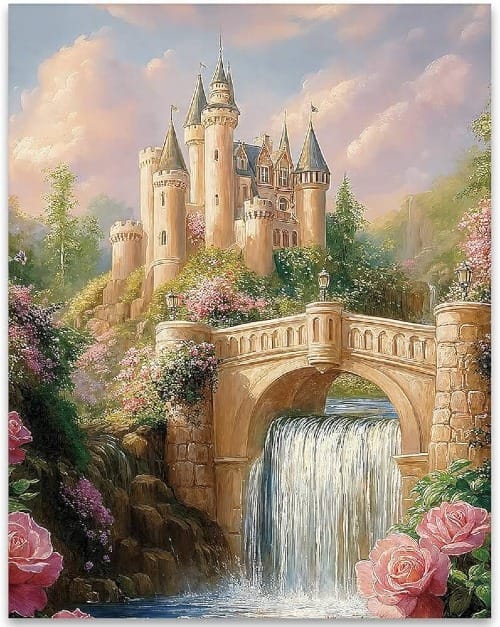
The Victorian Era spawned a new dimension in the knightly myth — but the myth was already history. The difference is in how the Victorians used the myth.
In a time when:
- Nobody is sure of their place in society (e.g. peasants moving up to towns, aristocracy threatened by new industrial bourgeoisie), the medieval period offered an organic hierarchy (king -> noble -> knight -> peasant).
- Uncertainty and doubt dominate; religious faith feels reassuring.
- Most men are abused factory workers; medieval knights embody the idea of "heroic masculinity".
- Industrial Revolution is ugly and unhealthy (pollution); the aesthetic beauty of a mounted knight riding through the countryside is easy on the eye.
- Class conflict dominates your daily life; the moral clarity in medieval literature feels tempting (good vs evil).
But architecture played its own part.
English Victorian Architecture (Click to View)
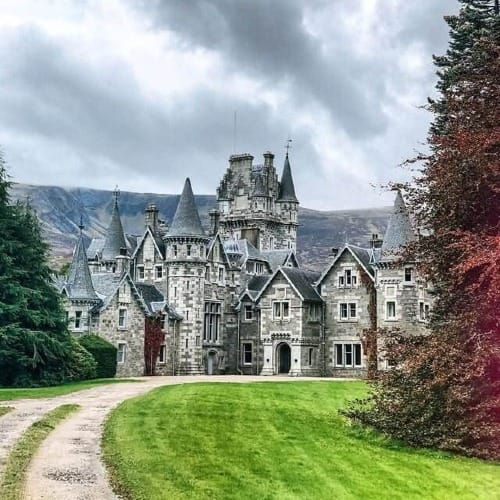

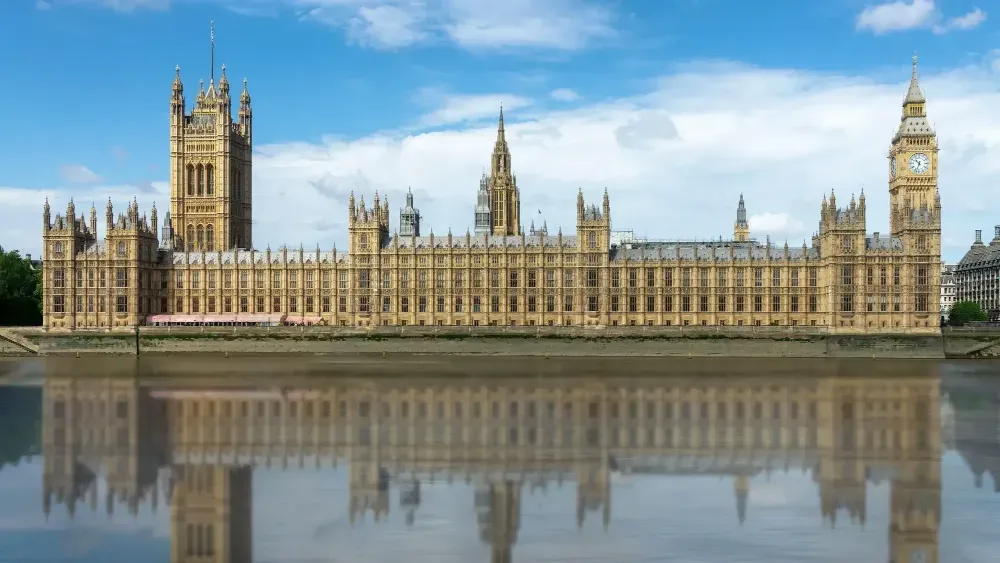
In the years 1800-1900, England, the argument was that Medieval Gothic was authentic, noble, superior. Churches were built to LOOK medieval, fake castles were erected for nouveau riche, and many iconic landmarks (e.g. The Tower Bridge, The Houses of Parliament) were dressed up in a medieval costume. This created a visual environment where medieval = better.
Additionally, many well-known "medieval" paintings were in fact painted in those years. But they were painted to reflect the ideal — hyper-detailed, beautiful women, noble knights in shining armour, bright, jewel-like colours. This is where the mental image comes from: ladies in towers with long flowing hair (did not exist), romantic forests and castles (rare), knights in gleaming plate armour (plate armour is 15th and 16th century, not medieval times).
"Mediaval" Paintings (Click to View)
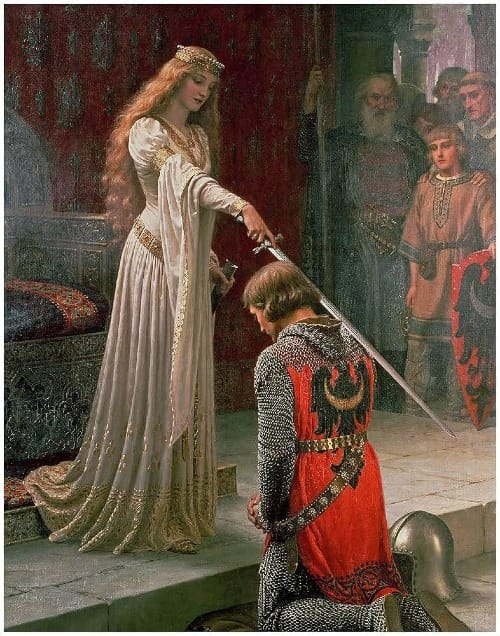
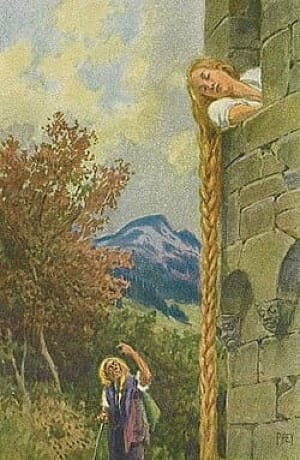
What they failed to include was all the dirt, disease, and violence that was part and parcel of medieval life. After all, disease and dirt are not beautiful, and all medieval paintings HAD TO look beautiful.
So whenever you picture "medieval", you are probably seeing Victorian imagery and not reality.
Of course, Victorians contributed to a lot more than just that — the myth of medieval purity (i.e. sexuality bad), chivalric orders and rituals (to justify Victorian traditions and power structures, e.g. at schools and in the military), civilization building (i.e. "our ancestors brought civilization to pagans, now we bring it to savages in our colonies"). But these are too intricate and controversial to talk about here.
Just remember this: many medieval myths are actually Victorian myths (1800-1900CE).
History Catches Up (1900-Now)
By 1900, the "historical medieval knight" had these traits:
- Physical Perfection (handsome, strong, graceful)
- Pure and Pious (virgin or abstinent — Victorian addition)
- Crusader (muscular Christian)
- Loyal (to his king, lady, or code — depending on the story)
- Protector of the Weak (women, poor, oppressed)
- Gentleman (refined manners and speech)
This figure NEVER EXISTED.
The Victorian knight is a Victorian Gentleman in a medieval costume.
It's a composite of selective medieval romances, Victorian moral values, class anxiety, imperialism, and yes, even its gender roles (men protect, women inspire).
Historians in 1900+ began to chip away at the myth, and modern academia all agree that the Chivalrous Knight did not exist. Debates are about nuance (how bad was it?), but the myth is thoroughly dismantled. No serious historian believes the Victorian version.
The public is divided. Some people know the truth (brutal, violent, gritty); others still believe the myth. If I had to guess, most people sit in the second category (romantic believers) because movies, books, and even education typically focus on the "good" aspects of knighthood, such as loyalty to their kings and protecting their realms, even if they're aware of the unsexy reality.
Academic Dismantling (~1950-2000)
Feudal Society by Marc Bloch (1939) was the first major academic work dismantling the medieval knight myth. Rather than study the romances, he focused on socio-economic structures. He asked, "How did feudalism actually work? What role did knights play in the system?"
His findings were unchivalrous: Feudalism was an economic system of labour extraction (unfair, oppressive, violent), knights were the strong right arm of the system, and "chivalry" was an ideological veneer.
Chivalry by Maurice Keen (1984) traces chivalry as an ideology (not reality). It discusses the gap between the ideal (chivalrous) and practice (not so chivalrous). It was another major academic work that became THE standard textbook on the topic of medieval knights.
But it is Chivalry and Violence in Medieval Europe by Richard Kaeuper (1999) that thoroughly dismantled the legend and examined how honour required violence, and chivalric codes (there were many) existed to justify violence, not prevent it. The central thesis throughout the book is that chivalry and violence were LINKED, not opposed. Honour and glory required bloodshed — a lot of bloodshed, — and protecting the weak did nothing to improve your standing.
Historians continue to explore the medieval reality. Nobody doubts the chivalrous knight is fictional, but some questions are still under debate: How common was knightly warfare? How did the aristocratic identity form? Were tournaments as described in literature, or were they criminal enterprises?
The Real Knight: Boorish, Cowardly, Self-interested
The medieval knight was the boogeyman of that world.
The first knights were independent or semi-independent highway robbers and thugs. Nothing was off-limits (except directly disobeying their king). Peasant hunting? Common. Raping common women? Common. Robbing churches? Common. And because no institution or army could stop them — except other knights — they had a field day for much of the early medieval period.
Domestication was difficult. Knights had every incentive NOT to let themselves be domesticated. They were on top of the food chain and resisted reformation until technology gave them no choice.
But what evidence do we have to so wantonly condemn knights? Were they really as bad as I made them out to be? Or maybe I am being unfair?
Case Against The Medieval Knight (1000-1500CE)
It is impossible to paint the full picture of medieval reality. Nobody bothered to mention average knights going about their business; violence was routine, and peasants couldn't read or write.
When somebody did mention knights, it was either because they did something exceptionally good, exceptionally bad, or if the knight in question was famous or powerful.
Most knights left no record. We know next to nothing about them. But that doesn't mean we have no evidence.
The evidence against knights is overwhelming. I cannot possibly present all of it, but I can give you just enough to prove that, unfortunately, the knight from fairy tales is just a fantasy that had nothing to do with reality.
Exhibit 1: Crusades (1096-1291)
Brutal and unrestrained.
In 1095, at Clermont, Pope Urban II delivered a speech to the knights. He stressed the evils inherent in the knightly life, and as a form of atonement, invited them to join the First Crusade.
"You are proud; you tear your brothers to pieces and fight among yourselves. The battle that rends to flock of the Redeemer is not the militia Christi. Holy church has reserved knighthood for itself, for the defence of its people, but you pervert it in wickedness. You oppressors of orphans and widows, you murderers, you temple-defilers, you lawbreakers, who seek the rewards of rapacity from spilling Christian blood. If you wish to save your souls, either abandon the profession of arms or to boldly forth as Christi milites and hasten to the defence of the Eastern church."
If the Pope is to be believed, Europe was primed to explode. Western Europe in particular had too many armed nobles, young knights with no land, and constant local wars.
But Pope Urban II saw an opportunity. Why not redirect violent knights away from Europe to fight heathens? At the same time, he could unite Europe under his papal leadership, assist the Eastern Christians, and reclaim Jerusalem — all in one fell swoop.
This seemed like a perfect solution. But was he wrong.
The First Crusade (1096-1099)
This one was the worst.
Let's begin with the Rhineland Massacres of 1096.
The knights attacked Jewish communities in Europe — massacres in Speyer, Worms, Mainz, Cologne — and killed thousands. And the Crusaders hadn't even left Europe yet!
Their justification?
"Why fight Muslims far away when there are non-Christians here?"
This was despite the Church officials prohibiting the pogroms, or even trying to shelter the Jews in their homes and churches. The Crusaders did not care — they were a law unto themselves.
When the Crusaders made it to Anatolia (modern Turkey), they didn't just fight the Seljuk Turks — the "infidels" they were meant to be actually fighting. The Crusaders CONSTANTLY clashed with their Byzantine allies, looted Christian villages, and fought among each other. Many never made it to Jerusalem.
The Crusaders besieged Nicaea and Antioch, and they did not do it "chivalrously". Rather, they slowly starved the besieged (including civilians), employed terror tactics, and sometimes executed defenders and civilians afterwards. At Antioch especially, the Crusaders fought each other over who gets to keep the city for himself — after they had massacred its garrison, that is. At one point, it looked like the crusading knights would abandon the Crusade because they were out of food and supplies, and their leaders still couldn't agree on who gets the title of "Prince of Antioch".
But the Crusaders really outdid themselves at Jerusalem (1099).
"But when our men had mastered the walls of the city and the towers, then wonderful things were to be seen. Numbers of the Saracens were beheaded—which was the easiest for them; others were shot with arrows, or forced to jump from the towers; others were slowly tortured and were burned in flames. In the streets and open places of the town were seen piles of heads and hands and feet. One rode about everywhere amid the corpses of men and horses."
The Crusaders breached the walls on July 15, 1099 and began massacring everyone in their path. Thousands of Muslims and Jews were slaughtered, with the highest estimate giving the grand total of 70,000 slain. Murders continued for days, and it included the infamous burning of Jews in their synagogue.
"Men rode in blood up to their knees and bridle reins. Indeed, it was a just and splendid judgment of God that this place should be filled with the blood of the unbelievers, since it had suffered so long from their blasphemies."
The quotes are not propaganda from enemies. Crusaders themselves wrote it — because to them, it was divine justice, not massacres. Peak Christian behaviour.
The Third Crusade (1189-1192)
The Second Crusade (1147-1149) was uneventful, and in any case ended in a complete failure for the Christians.
The Third Crusade was called after Saladin retook Jerusalem in 1187 and defeated crusaders at Hattin.
Victorians often portrayed Saladin and Richard the Lionheart as chivalrous opponents who respected each other. And while it is true that they behaved courteously to each other — exchanging gifts, refusing to kill one another, conversing via letters — this was motivated purely by diplomacy and self-interest; just as knights often spared other knights but had no qualms about killing commoners, Saladin and Richard similarly adhered to this code of conduct.
Saladin executed the knights after the Battle of Hattin and enslaved the infantrymen, and Richard massacred Muslim prisoners after the siege of Acre — despite earlier promises of safety. Naturally, both sides tried to justify their decisions, claiming it was necessary, while simultaneously condemning the other side for their brutality.
Once again, the pattern is evident: knights — or rulers in this case — treat their equals with courtesy, but butcher everyone else.
The Fourth Crusade (1202-1204)
This is perhaps the Crusade that ended all Crusades.
The goal of the campaign was to attack Egypt, the key Muslim power base, before turning their sights on Jerusalem.
The Crusaders, however, were unable to pay the Venetian navy for transport. In lieu of payment, the Crusaders agreed to attack a Christian city of Zara and hand it over to the Venetians. They did exactly that, although not before fighting the Venetians over the division of loot. Reportedly, hundreds were killed in brawls.
Then, in 1203, a decision was made to make a stopover at Constantinople, the largest Christian city in the world (~500,000 population). The Crusaders thought they could put their own leader on the throne of Byzantium (and become rich as a result). The Venetians, on the other hand, were motivated by two things: one, they had a bitter commercial rivalry with the Byzantines, and second, the Westerners still hadn't forgotten about the Massacre of the Latins (1182) in which 60,000 Italian Catholics were killed — men, women, children, everyone.
The Crusaders did manage to put a pro-Crusader emperor Alexios IV on the throne, but the city of Constantinople couldn't afford to pay the Crusaders off, especially after the previous Emperor, Alexios III, had fled the city with massive amounts of gold and jewellery, leaving the state coffers empty.
And so the Crusaders resumed the siege on April 8, 1204. After just five days, they took the city on April 13 and sacked it.
For three days, they indiscriminately murdered, raped, and vandalized the city. The Library of Constantinople was burned, destroying almost all ancient texts. Priceless artworks and relics were either destroyed or melted down for gold. Anything that was even remotely valuable was seized, churches were smashed and robbed, and many individual Crusaders kept much of the stolen wealth for themselves.
Crucially, the Byzantine Empire territory was divided, contributing to its later decline and fall in 1457.
And the best part?
The Crusaders never even went to Egypt or fought any Muslims.
Other Crusades
Every other Crusade ended in failure. After the collapse of the last Crusader stronghold in 1291, Acre, nobody took crusades seriously anymore. The infighting, atrocities, and failures of the Crusaders were a blow to the legitimacy of the Christian Church. It was at that point that Christianity started to tear itself apart, a prelude to the brutal religious wars in the next centuries.
Noteworthy is the Children's Crusade (1212) in which tens of thousands of children (or teens/young adults, more likely) marched to the Mediterranean, expected the sea to part (didn't happen), and were sold into slavery by the local merchants. This is what happened whenever vulnerable people tried to join the Holy War; neither knights nor "chivalry" protected them from abuse. As many as 30,000 were taken down to Tunis and enslaved. They were never heard from again.
Exhibit 2: The Hundred Years' War (1337-1453)
France and England were the first kingdoms "influenced" by the Chivalrous Knight Myth. They ought to have been the most reformed, just, and peaceful places in Europe.
Mathematics shatters that illusion, and the numbers are revealing.
The total number of casualties in the war is disputed, but some estimates say it could be as high as 3,000,000 deaths, mainly civilians.
Of course, the Black Death (1346-1353) might have contributed to the grand total. That makes it very difficult to guesstimate. But the scale and brutality of the war is well-documented, and the behaviour of knights on both sides was unquestionably bad — and often worse than during the Crusades.
The Hundred Years' War is one of the clearest examples of systematic, normalized violence against civilians by knights. Few conflicts in Medieval Europe come close to the terror and destruction French people experienced.
And the reason is actually quite simple.
English Kings often had limited funds, soldiers were unpaid, and so everyone relied on plunder as payment. The logic was simple: plunder or starve.
No stone would be unturned, no village spared, no farm animal not taken away. And the price for resisting was death — although the price for surrendering was also death. Running away wouldn't do you much good, either, because raids were conducted by mounted units — and the price for getting caught was usually death.
So you were in a pickle no matter what you did.
But this was not accidental.
The tactic of indiscriminate plunder and terror was known as a chevauchée. It was legitimate and, although brutal, very effective in causing mass flight of refugees into towns, destroying the productivity of a region, and humiliating the local authorities. It was practiced by both sides — but overwhelmingly by the English — and affected mainly the poor who couldn't defend themselves or pay ransom to buy their survival. Peasants were hunted for sport, soldiers laughed while villages burned, and thousands of refugees were slaughtered to spread terror.
And now remember that looting made soldiers and elites wealthy. With no one to oppose them and their horses overladen with plunder, they had every reason to keep this up indefinitely.
The period was characterized by constant violence. Several major campaigns occurred, but even "peace" offered no respite from mercenary companies bullying commoners and undermining the French kings who were too powerless to stop them.
For instance, King Edward III invaded France in 1346 and, according to chronicles:
"(...) descended along the Norman coast, sacking and burning villages and castles, pillaging and killing without opposition (...)"
Northern France was rich and completely defenceless. Dozens of towns were ransacked mercilessly, put to the torch, and their civilian population killed. Nobody was safe.
Another one was the "Black Prince", a paragon of virtue and honour, especially popularized by the Victorians. An ideal knight, the greatest of his age. Or at least you'd think that until you've learned what the contemporaries meant by "ideal knight".
"The Prince rode through the country, wasting all before him. The soldiers made no count of men or women, but put all to death except such as they thought were worth a ransom. The towns and good towns in the flat country were burned and destroyed."
In 1355, Edward the Black Prince marched through Southern France, burning and looting hundreds of villages and dozens of towns. The Black Prince deliberately split his army up to maximize destruction, evidence of strategic sophistication. And because nobody in Southern France expected such a blatant raiding campaign (no less in autumn/winter), the Black Prince was virtually unopposed and could lay waste at his leisure.
"There was neither pity nor mercy shown to the poor people who had been unable to escape... All were put to the sword, wherever they could be found... It was a most melancholy business."
Next year, in 1356, the Black Prince launched another raiding campaign. This time, he went North and caused devastation in Central France. The devastation was so significant, France descended into anarchy — although the French defeat at Poitiers definitely contributed to the chaos.
For the next few years (1356-1360), the English would continue to devastate France and massacre civilians and prisoners. The scale of destruction and lives lost cannot be exaggerated. And when later campaigns were launched (1373, 1380, 1415), similar destruction followed.
But even peacetime offered no respite.
After various peace treaties were signed, thousands of knights (English as well as French) suddenly lost their sources of income. They would band together and ravage the French countryside, taking advantage of the French weakness and war exhaustion. These "Free Companies" wouldn't be eradicated until after the war had ended and order was restored.
Nothing here comes across as chivalrous or noble — certainly not in the modern sense.
And so many campaigns were fought, terror tactics were used, and millions perished.
All motivated by greed and power hunger.
Exhibit 3: Church Peace Movements (~1000)
The fact that the Church prohibited certain "activities" — such as looting churches, killing commoners, raping peasant women, etc — tells us all we need to know about the daily life of a medieval knight.
Unless knights were constantly doing those things, I don't see why they would need to be told not to do them.
Conversely, nobody ever told knights they should be more violent. And honestly, I should think this would be necessary if knights really were noble, generous, and pious — because such saints would spend too much time praying in church, or be too busy writing poems and helping peasants plough the fields in peacetime.
No. They were not saints.
Medieval knights were a disease. The Church Peace Movements wouldn't exist if knights behaved.
Exhibit 4: What Knights Themselves Wrote
Very few knights were literate, but some wrote.
They describe reality vs ideal.
For instance, Geoffroi de Charny complained that medieval knights were motivated by profit and avoided real danger when possible. His ideal knight ought to be brave, loyal, and pious. Furthermore, he should seek danger and (paraphrasing), "go no longer than a week without a fight" because glory and honour can only be obtained in dangerous fights, proportionate to how dangerous the fight is.
A key complaint is that knights steal from peasants and rape common women, but flee from risky engagements.
His final complaint is that knights are becoming soft — because instead of fighting, they are spending their time at court, dressing up like women and growing fat.
The last one is probably strange to modern people. How can a murderous highway robber be "soft"? But for Geoffrei de Charny (real medieval knight), this was the point; a knight should be riding around and killing. A "peaceful" knight is soft by definition.
Another example is Bertran de Born, a French knight-poet who wrote songs about chivalry and its glory.
"Maces, swords, helms of different hues / shields that will be riven and shattered / we shall see at the start of the melee / and many vassals struck down together / from which the horses of the dead and wounded will wander at random / Once entered into battle let every man of good lineage / think of nothing but splitting heads and arms / for it is better to die than to be vanquished and live."
Splitting heads and arms is celebrated, and the text is not propaganda; this is a knight writing for other knights about what they value.
These and similar poems demonstrate that knights enjoyed violence and war was exciting to them. No knight has ever written a poem or codex advocating for the protection of peasants, human rights, or universal justice — the things many people believe knights actually did.
Knightly texts are admissions.
Exhibit 5: Violence Endemic
Medieval Europe was bloody. And I don't think modern people appreciate just HOW violent it was.
It was so violent that nobody tried to record every single incident. It was just a part of their daily life, like bad weather and taxes.
Rape was endemic and rarely punished. Taxes were crushing. Serfdom was slavery in all but name. Chevauchée — terror tactics against civilians — was a standard military doctrine. Non-combatants were tortured and killed for sport. Pillaging was how soldiers got paid. Heads and other body parts were collected as trophies. Villages and towns were routinely put to the torch.
Romance literature implies it is the common soldier committing these crimes. Knights? They are the force of good, doing the best they can to limit these atrocities. But when you remember the previous exhibits, like the Crusades and the Hundred Years' War, you understand it's nonsense. Knights profited most from war.
Speaking of romance literature, even there you will find no shortage of "evil" knights. But it doesn't mean what you probably think it does.
In knightly poems, violence is celebrated, might makes right, and the difference between the "main hero" and all the "evil antagonists" is mostly their fighting skills. Whoever wins earns the title "chivalrous" and all the rewards that come with it.
Sometimes, the "good" knight is one with a vision; Jesus appears to him, asks him to spare the place of worship he was about to loot, and the knight obeys. That earns him the adjective "honourable".
The village he had burned? The peasants he had killed? The women he had raped? All is forgiven. He spared the church and the clergymen inside it. That makes it all better.
But now that I've touched the topic of rape, we need to examine it in more detail. It is central to a lot of these stories and deserves explanation.
Sexual violence and the fact that medieval women should be concerned about forced sex is constantly reaffirmed. Romance literature acknowledges that many knights rape even noble women when they have the chance. But even the idealized knights typically "conquer" women, i.e. win the right to "own" them. For example, many knights excel in tournaments specifically to win the favour of their favourite maiden.
"And there are many who say that they would not want to love Queen Guinevere if they did not declare it openly or if it were not known. Such men would prefer it to be said by everyone that they were the accepted lovers of ladies, even if this were not true, than to love and meet with a favourable response, were this to be kept secret."
Let's be brutally honest:
Knights wanted to win tournaments to earn the privilege of having sex with their favourite lady. Queen, princess, servant, doesn't matter which. The most "chivalrous" knight chooses, and the woman is expected to "reward" the valiant warrior.
You see, the tone of the poems doesn't suggest that knights want to shower these ladies with gifts or treat them as equals. That is a Victorian fantasy. In romance literature, medieval knights sought exclusive ownership over these women.
Just to be clear:
Exclusive ownership = right to bed them.
Outside of literature, medieval sources strongly suggest that adulterous relationships between noblewomen and other men — princes, servants, or medieval knights themselves — were near universal. This makes sense because noble marriages in these times were political. Love was usually found somewhere else.
Knights also embarked on quests to win renown. But winning renown comes with an expectation of a "reward".
And a knight who feels entitled to his "prize" does not ask nicely. After all, he can say: "I proved myself!" Even medieval literature doesn't shy away from this fact.
The upside is that many knights leave women with a sack of gold before departure. Although they also leave them pregnant.
But all this is noblewomen
If you think this was bad, you forget that peasant women were outside of such considerations. No code of conduct protected them; a knight didn't have to "win" a peasant woman to violate her. He just took what he wanted, no questions asked.
Much of this argument is based on literature, yes. But it reflects the medieval reality and attitudes; women accepted that encountering a knight in a forest meant rape, and being "won" in a tournament "obliged" her to offer herself to him "willingly".
Her only salvation was being "saved" by another valiant knight who could defeat the offending knight and rescue her from her predicament. But that was hardly good news. The noble rescuer deserves a "reward", and he will not take 'no' for an answer.
All this was best-case scenario. You don't need to hear a description of the worst-case one.
Exhibit 6: Peasant Complaints
We have very few peasant voices. But when we do, they are revealing.
The English Peasants' Revolt (1381)
In 1381, a large peasant revolt broke out in several places in England and marched on London, the capital. As many as 70,000 armed peasants could have taken part in this uprising.
I won't be diving into the finer details of this rebellion. What interests me here is WHY the peasants saw fit to rebel in such numbers.
The peasants complained:
- Lords force peasants to work extra days
- Lords rape peasant women (droit de seigneur, disputed whether it was a noble right or if it just happened)
- Lords prevent peasants from leaving their land
- Lords steal peasants' property
- Lords use violence to impose their will on peasants
The list of grievances was long, but it all comes down to this:
"The lords treat us as beasts!"
This reveals systematic oppression and no legal recourse for peasants. As soon as the peasants saw an opportunity to rebel — it wasn't just one rebellion, but an avalanche of several simultaneous peasants' revolts — they marched on the capital and complained about the nobility, demanding better treatment.
70,000 peasants would never march on the capital if only a few nobles were bad. Systemic oppression is the only explanation.
Nothing like that could happen under a "chivalric" leadership.
The German Peasants' War (1525)
The biggest peasants' revolt in Medieval History. As many as 300,000 German peasants, farmers, townsfolk, etc took part.
For a brief background: German knights (heavy cavalry) had become obsolete by then, and so now they relied primarily on taxation to afford their luxurious lifestyles. The taxes, as well as excessive labour and loss of rights, were unbearable to the peasants. This wasn't just a minor complaint; the commoners had never had it as bad as in the 1500s.
The rebels proclaimed and published their demands in print. These demands spread throughout Germany.
The Twelve Articles included:
- The right to elect our own pastors
- Tithes should support local pastors only. Surplus should go to the village poor.
- Serfdom need be abolished
- The right to hunt and fish
- Access to firewood from forests
- Reduction of labour services
- No more arbitrary labour increase by lords
- Fair rents (i.e. "Lords force us to work for free!")
- No unjust laws (i.e. "Lord punish us on a whim!")
- Return of common lands
- Abolition of death taxes (i.e. "Lords rob poor widows and orphans!")
- Our demands are based on Scripture
These demands reveal that peasants experienced heavy oppression in the form of excessive labour, loss of rights, arbitrary taxes, and serfdom. Just like the English peasants 140 years earlier, they were treated as beasts. But unlike in England, the German lords were increasing the exploitation.
The taxes were not only high, but whimsical. For example, if a peasant wanted to marry, he would have to pay a tax. If a peasant died, his best property and tools went to the lord. Additionally, patricians (landowners) sought to extract revenues from peasants as well; road, bridge, and gate tolls were imposed on a whim. The clergy, too, instituted their own taxes; they set up prayer houses to extract more money from the peasants.
The outcome of the rebellion is also revealing: the peasants were crushed brutally (~100,000 killed), the survivors were punished with heavy fines, and nothing was achieved.
Knights and nobles showed no mercy. They were not the benevolent protectors that romance literature makes them out to be.
Final Verdict
The idea of a chivalrous medieval knight does not withstand scrutiny. You don't even need to examine the evidence in detail. Anywhere you zoom in, you see warlords extorting local populations or wantonly slaughtering them for sport.
"The Chivalric Code" never existed. Every echelon of society had their own ideas of what "chivalry" meant, but they all agreed that knights would always stay violent. They tried to redirect violence, yes, but not restrict it.
In the end, knights did whatever they wanted (1000-1300) or as much as they could get away with when royal justice strengthened (1300-1500). But even with harsher rules and oversight, most knights got away with their crimes, and the few that didn't were punished lightly.
Treason was the only offence that everyone agreed was bad. Anything less? Routine.
Conclusion
Modern people think: "Medieval knights were chivalrous, then it declined."
Reality: Medieval knights were brutal, but some people wrote fantasy stories about medieval knights, and those stories got more popular over time.
The gap between the myth and reality was always recognized by contemporaries. But the reality of brutal enforcers served nobody, so it was forgotten.
This is how historical memory works. Utility over accuracy.
When myth becomes more useful than reality, we forget the second one. The mechanism is universal. And the medieval knight is just one example.
Enter your email
Posts take ages to come out. Subscribing means you come back only when new posts are up.


Member discussion